
Why Intel Maps: Forensic Wallet Clustering for TON
Intel Maps is TON-native and forensic-first. This is a plain-language walk through what it does — cabal-aware token grades, multi-signal wallet clustering, first-party infrastructure labels, and a live KOL buy/sell leaderboard — and why each of those matters on the dimensions that actually decide a trade.
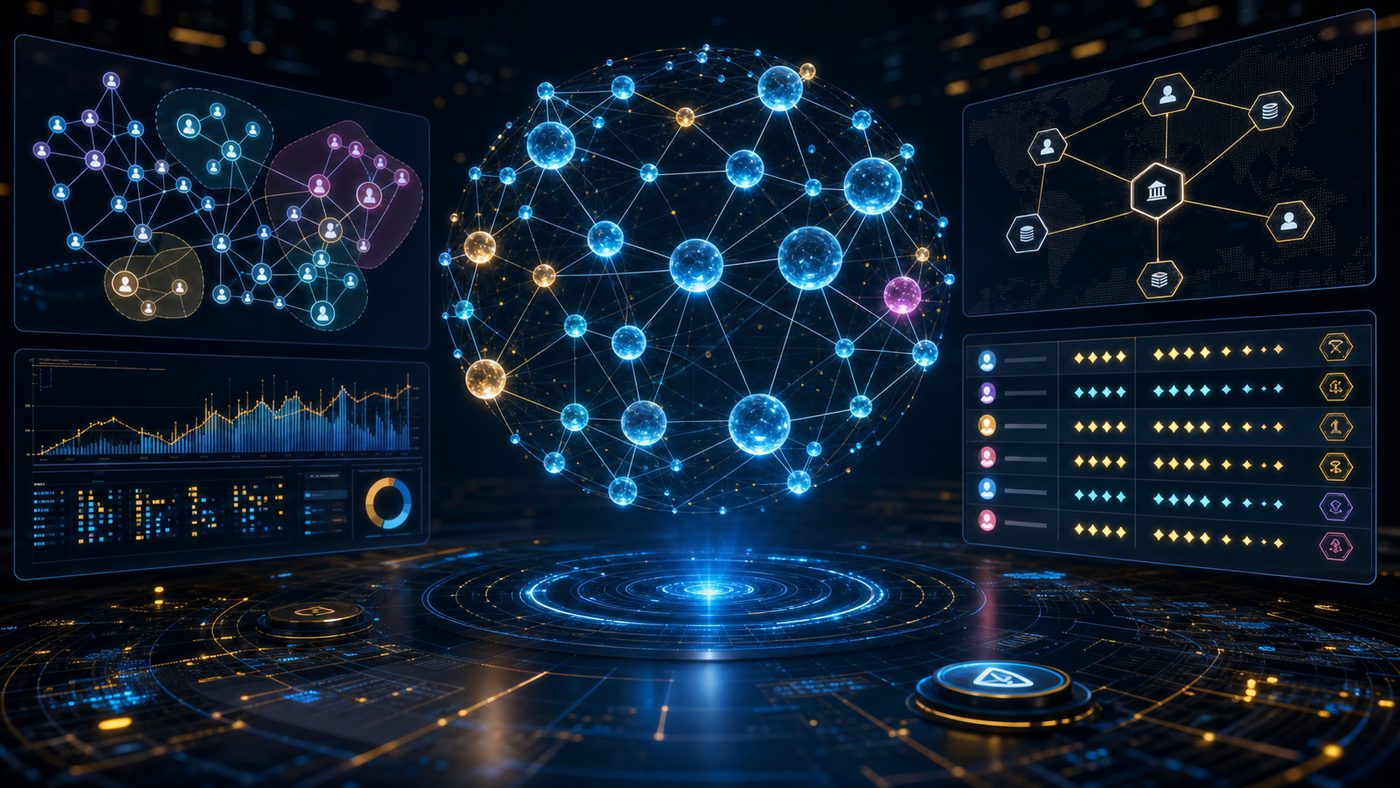
SCOPE NOTE. This article describes live capability. Live today: TON jetton holder maps, Hyperliquid trader intelligence, cabal grading, KOL leaderboard, NFT/gift indexing (170K+ items), TON Center fallback for empty-events. Look for inline timing on any specific claim.
On-chain visualization tools — pioneers like Bubblemaps and Arkham Intelligence among them — taught the whole market to read a token's holder graph as circles, lines, and cluster shading. Intel Maps builds on that visual language and takes it forensic-first for TON: instead of just drawing the graph, it grades it, clusters the coordinated wallets inside it, and names the infrastructure sitting in the holder list.
This is a plain-language read on what Intel Maps does and why each capability earns its place in a trader's workflow. We built it, so treat the framing accordingly — but every claim below is about our own surface, stated as something you can go verify on any TON jetton right now.
The one-line summary
Intel Maps is TON-native and forensic-first. Its cluster engine is multi-signal, the infrastructure labels (DEX pools, CEX deposit wallets, vesting contracts) are first-party, and the system grades every token A–F using a cabal-aware concentration model. On TON it goes deep — every jetton above a volume threshold, with full swap history and a KOL overlay.
The forensic layer is the point. Where conventional bubble maps stop at drawing the holder graph, Intel Maps adds three things on top: a letter grade capped by coordinated-cluster size, a KOL buy/sell feed for TON, and attested infrastructure labels so pool and deposit wallets never masquerade as organic holders.
Coverage: Intel Maps covers TON and Hyperliquid. It sits alongside the broader on-chain toolkit — general-purpose visualizers and entity-identity engines — rather than trying to replace all of it. Reach for Intel Maps when the question is “is this TON holder graph healthy or coordinated?”
Live today: TON holder maps, Hyperliquid trader intelligence, cabal-aware grades, KOL leaderboard, NFT/gift indexing, and public API access.
The 60-second capability rundown
| Dimension | What Intel Maps does | Status |
|---|---|---|
| Primary use case | Cabal grading + KOL forensics on TON | Live today |
| TON coverage | Full chain — every jetton ≥ $1k 24h volume | Live today |
| Hyperliquid coverage | Top traders by PnL + real-time fill feed | Live today |
| Cluster math | Multi-signal (shared funder + co-trade timing + cabal score) | Live today |
| Infrastructure labels | First-party, TON-native, attested by us | Live today |
| KOL tracking | Built-in leaderboard + per-wallet PnL | Live today |
| Token grade | A–F, capped by coordinated-cluster size | Live today |
| API access | Public API for in-app holder widgets | Live today |
| Free tier for traders | Free start with map credits | Live today |
What Intel Maps does, and why it matters
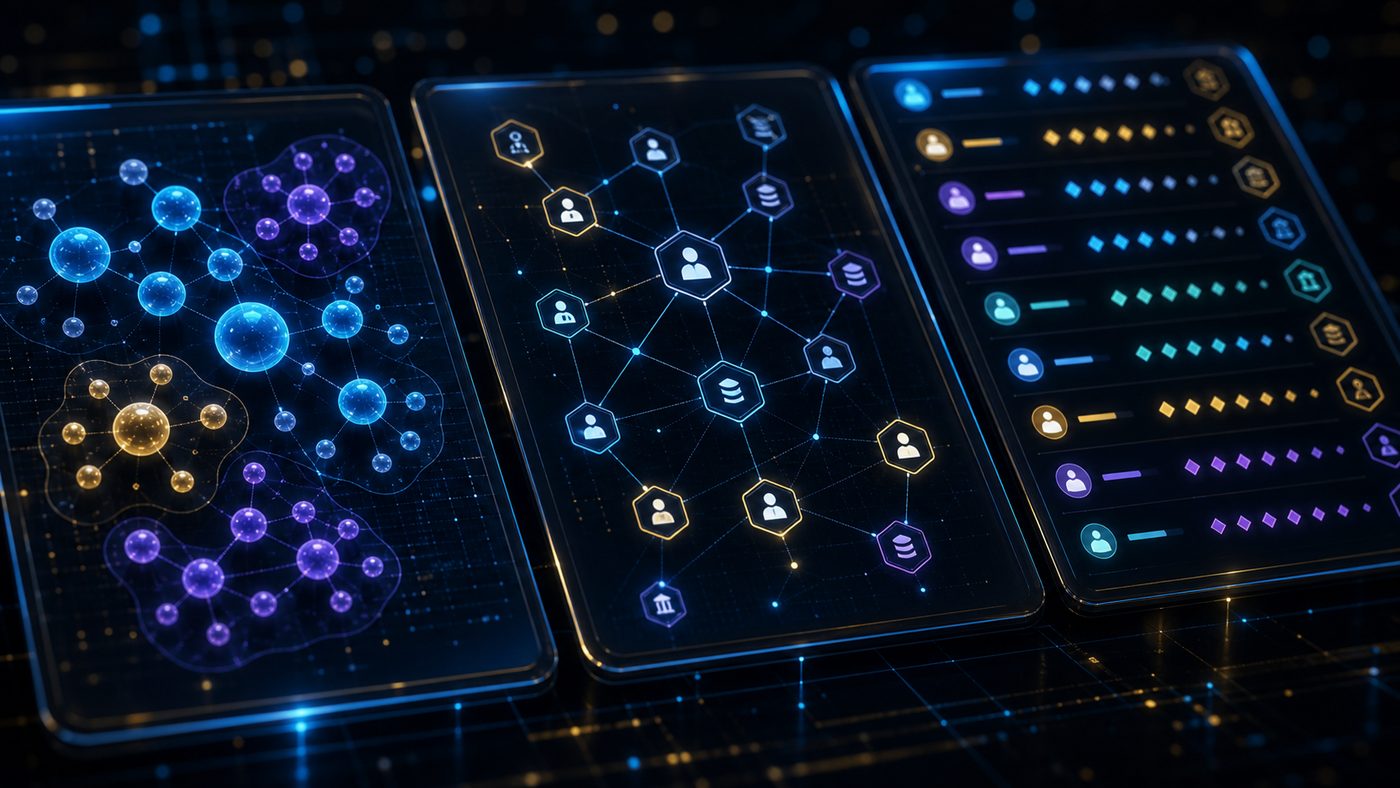
Intel Maps makes a shareable, at-a-glance holder map
If you are writing a thread, briefing a desk, or making the case to a non-technical reader that a token's float is suspect, Intel Maps produces a clean, screenshot-ready holder map. The circle-and-line aesthetic has become the visual shorthand for "this token is concentrated" across crypto Twitter, and Intel Maps speaks that language — then adds a letter grade and cluster shading on top so the picture carries a verdict, not just vibes.
Intel Maps is also built to be embedded. Its public API lets wallets and explorers surface the holder map and grade inline, so a casual user searching a token can hit forensic context without learning a new UI. That reach is worth building for.
Intel Maps answers "how is this token distributed, and by whom?"
Some on-chain tools are built to answer "who is this wallet in the real world?" — matching addresses to named exchanges, market makers, and individuals, mostly on EVM. Intel Maps answers a different, complementary question: how is a token's supply distributed, and how many of those wallets are secretly the same operator? On TON, that is the question that decides a trade, and it is the one Intel Maps is purpose-built for.
For teams that also need saved boards, custom queries, and movement alerts, Intel Maps ships a growing alerts surface. The forensic holder graph is the core; the monitoring tools sit around it.
Intel Maps wins on: TON depth, cluster math, and the grading layer
On TON, the depth is the differentiator. We index every jetton above a $1k daily volume threshold — over 160 tokens as of this writing, at UTYA-level coverage depth (≥ 500 holders, full swap history, KOL overlay). Where most on-chain tools cover a smaller curated set on TON — or do not cover TON at all — Intel Maps treats TON as its home chain. If your investigation lives on TON, this is the deepest shelf available.
The cluster math is the second material difference. Most forensic visualizers cluster on shared funder — "these two wallets received their first transaction from the same address, therefore they are linked." That signal is real but incomplete; sophisticated coordination routes funding through intermediaries to defeat it. Our cluster engine combines shared-funder with co-trade timing (wallets that buy and sell the same tokens within the same blocks), behavioral fingerprints (gas patterns, claim patterns), and an explicit cabal-aware concentration score that caps a token's letter grade by the size of its largest behavioral cluster.
That last bit is the load-bearing feature for a trader. A token can have a "good" Gini coefficient and a "healthy"-looking top-10 share but still be 50% controlled by one coordinated group. The grade is the line that catches it. A token where the largest cluster controls 60% of supply will not score above a D regardless of how pretty the surface stats look.
Intel Maps also ships: KOLs, infra labeling, and honest pricing
KOL tracking is a first-party feature. We maintain a curated set of known Telegram callers and on-chain influencers, track every jetton trade they make, and surface the cumulative PnL on a live public leaderboard. It is a real-time buy/sell feed for TON that works out of the box — no data subscription to wire up, no board to build by hand.
Our infrastructure labels — DEX router wallets, pool addresses, CEX deposit addresses, vesting and lock contracts — are first-party and TON-native. We attest them ourselves rather than scraping them, and they update with every new pool we discover. The reason this matters: if a forensic tool counts an infrastructure wallet as a holder, the concentration math is broken before it starts. Intel Maps identifies pool and router addresses — including DeDust v2 routers — and removes them from the holder count so your top-holder view reflects real people.
Price: Intel Maps' web tier starts free with credits and tops out at $19/month for trader-grade unlimited use. That is deliberately priced for individual traders, not institutions — the goal is that anyone investigating a TON token can afford to do it properly.
Where Intel Maps is the answer
| If you want to know… | Use |
|---|---|
| "Is this TON token a cabal?" | Intel Maps |
| "Track every trade a named KOL makes on TON" | Intel Maps |
| "Grade a TON jetton's concentration A–F" | Intel Maps |
| "API access for an in-app holder widget" | Intel Maps |
| "Which top holders are actually pool / infra wallets?" | Intel Maps |
| "A clean screenshot of a TON holder map for a thread" | Intel Maps |
| "Who are the top Hyperliquid traders right now?" | Intel Maps |
| "Real-world identity of an EVM wallet" | An EVM entity-identity tool |
Three honest caveats
First: we are biased. We built Intel Maps. Treat the framing accordingly, and if a section here reads like a sales pitch instead of an analysis, weight it down. We have tried to write it the way we would advise a friend, not the way our marketing team would — but you are still reading our own account of our own product.
Second: the data shelf keeps growing. Today Intel Maps covers TON and Hyperliquid, and we are building TON-Center, STON.fi, and DeDust integrations to deepen it. By the time you read this in late 2026 or 2027, parts of this page will be stale — check the dates at the top before you take a verdict to the bank.
Third: Intel Maps is focused, not all-in-one. If you also need real-world EVM entity identity or enterprise compliance tooling, those live in other, complementary products — and Intel Maps is happy to sit alongside them. The question for a TON trader is not "which single tool does everything" but "what gives me the sharpest read on this holder graph," and that is exactly where Intel Maps is built to win.
The bottom line. Intel Maps is built for serious investigative work on TON and Hyperliquid: multi-signal wallet clustering, cabal-aware A–F grades, first-party infrastructure labels, and a live KOL buy/sell feed — all in one holder map you can screenshot straight into a thread. For traders working in TON memecoins, it is designed to be the daily driver.
Stop guessing about distribution.
Paste any TON jetton, see its cluster math, grade, and KOL overlay in one view.
Open a holder map See pricingSources & references
- bubblemaps.io — product pages and supported-chain list
- intel.arkm.com — Arkham Intelligence platform
- docs.tonconsole.com/tonapi — TonAPI v2 reference (our primary TON data source)
- docs.toncenter.com — TON Center v3 (our fallback for SKITTY-class empty-events pools)
- dexscreener.com — trending and 24h volume reference
- Intel Maps internal: TON token coverage was 162 jettons ≥ $1k 24h volume as of 26 June 2026, with 116 at full swap-history coverage and 30 at strict UTYA-level depth.
Methodology
This write-up describes Intel Maps' own live capability and roadmap, drawn from the product over the last 90 days plus the publicly available documentation linked above. We will update it when Intel Maps adds a materially new capability, or when a reader points out an error worth correcting.